_ANZ-Group-shot_v2.png?w=100&v=f3a4afac-70ac-4758-8474-ff17fe163b1c&itok=Z_Qi2FlQ)


.png?w=100&v=76611618-74f9-4150-85bd-f3f88e49eece&itok=5ehAJg_Q)


.png?w=100&v=5053a26b-c336-46d9-b44e-ab91738f07c9&itok=efvsqCNL)


.png?w=100&v=d5f9955a-145e-481e-8081-5ddf4d74c7cc&itok=hKuNtBOw)


.png?w=100&v=2695a42f-b099-4e31-bdbd-c1b445ff88c0&itok=Md9-7E8t)


%20(2).png?w=100&v=a9b7928b-cece-4e51-b913-62ae316129a9&itok=fEHREjki)
_ANZ-Group-shot.png?w=100&v=72a4a24c-7670-47f7-a68e-edeaafa41c8d&itok=k25pq8iJ)
_ANZ-Group-shots.png?w=100&v=4d5e1cd2-60a9-45da-bcfb-1b8500ccaea9&itok=v6A67Pxg)


Drill into timber, soft metal and hard materials including brick and concrete with the RYOBI 18V ONE+ Hammer Drill.


Before you satisfy your urge to get gardening after a winter break (or a prolonged dormant period), make sure your gardening equipment is ready for action. In fact, this checklist might come in handy if you haven’t used your tools for a while, regardless of the season.
Note: These tips are not just for spring but apply to any period where tools may have been in ‘hibernation’ for some time.
Before inserting your genuine RYOBI battery into a RYOBI tool 18V ONE+ (and/or 36V) and pressing the trigger, check the batteries’ power status. Prior to charging them in an appropriate RYOBI charger, take a close look at the outer case for any obvious wear and tear, cracks, etc. Any damaged batteries should not be used or charged. Instead, place them in a battery recycling bin at Bunnings (some supermarkets also offer this service). Do not place them in your home rubbish or recycling bins.
Next, if the battery appears in good condition, wipe the battery points with a clean, dry cloth to remove any carbon or dust build-up.
Insert the battery into a genuine RYOBI charger (18V ONE+ or 36V) and charge it to full capacity. Do not store your batteries in a charger. Instead, keep them in a cool dry place.
NOTE: Avoid storing batteries in a garden shed in summer where temperatures indoors can rise to extreme.
Give your equipment a thorough inspection before connecting your battery. This includes the battery port (where you insert the battery). These often contain dust and debris.
Any tool with blades that comes into contact with plants should be disinfected regularly to avoid possible cross contamination of plant diseases. Common diseases include fungal, bacterial and viral, as well as mould. Some diseases will be specific to your location, so check with your local nursery about what to look out for.
Tips for cleaning the blades of your secateurs, hedge trimmers, pole pruners, etc.
Next, before using or storing your tools, lubricate their blades with a biodegradable product like RYOBI’s Garden Tool Blade Lubricant. It’s made from 98% biobased material and non-petrochemical based to prevent harming the plants you prune. It’s also non-toxic.
PS: A good lubricant can also extend the life of blades by reducing friction that causes wear and by protecting against rust and corrosion. You can even use a plant-based oil, like canola oil or olive oil, which will help prevent your blades from corrosion and won’t harm your plants.

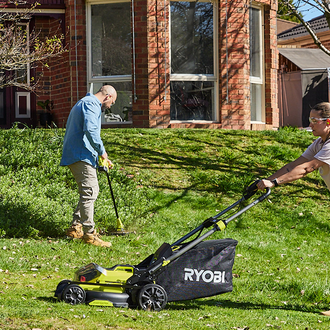
The beauty of RYOBI battery-powered mowers is that they require very little maintenance. Apart from keeping the battery ports clean, the only other maintenance tip is to wipe clean the mower with a dry cloth – do not use water to clean a battery-powered mower.
Check the line trimmer head for excessive wear or damage and replace if necessary. Also, be sure to use the correct diameter replacement line. Your line trimmer model will have a recommended diameter line to use – too thick trimming line can cause the motor to strain and damage it, too thin and the line can break continuously.
Check that the air intake vent is clear of any obstructions. Wipe clean with a cloth or bristle brush if any debris remains.

As with all battery-powered tools, especially batteries used in garden tools, keep them dry and continually check that they are in good working condition, that the terminals are kept clean and that the battery ports on the tools are free from oil, dust and debris.
Get the most from your garden with tips & tricks from Jason Hodges, Katja Phegan and more.
.png?w=100&v=6c04e2a3-04b9-449c-97a0-86f8df82dcb1&itok=D7d8Umfz)

.png?w=100&v=07272864-2df4-45f0-aa93-568aa3920466&itok=Lj7SSICT)

.png?w=100&v=4297d0f7-8d6a-4632-bff2-7c593a97d3cb&itok=fnsLcLhG)


.png?w=100&v=6fe76245-ac4a-4aa3-986d-04347f143028&itok=dFif4A99)